Case Study
RBH: Bridgewood Manor
Discover how For-Sight helped Bridgewood Manor increase direct bookings by 52% through targeted campaigns and data-driven guest engagement.
Examining the challenges and potential solutions for implementing AI technology in the hotel industry to stay ahead of the curve.

In today’s digital age, where technology and the Internet are seamlessly integrated into our lives, it’s crucial for the hospitality industry to embrace advancements that can benefit us. One such technology that holds immense potential is Generative AI. So, let’s dive into this exciting subject and explore how it can transform the world of hospitality.
In simple terms, Generative AI refers to Artificial Intelligence that has the magical ability to create new content, whether it be text, images, videos, or even code. It does this by learning from existing content and using that knowledge to generate fresh and unique output. Unlike traditional AI, which focuses on patterns in existing data, Generative AI uses that very data to create new and original content.
This remarkable technology has seen tremendous advancements in recent years. From Open AI’s ChatGPT to Google Gemini and Microsoft Copilot chatbots, these AI products are expected to grow at an unprecedented rate. Experts estimate that by 2032, the AI industry will reach a staggering $1.3 trillion in value, according to Bloomberg.
When it comes to the benefits of AI in the hotel industry, the advantages are manifold. Implementing AI technology can enhance both the guest experience and the efficiency of hotel operations. Let’s delve into some of the key benefits:
Enhanced Guest Experience: AI-powered chatbots, such as AskSuite and Hijiffy, specifically designed for hotels, can instantly assist guests by answering their queries and providing personalised recommendations. This seamless integration of AI can significantly boost customer satisfaction and foster greater guest loyalty.
Streamlined Operations: AI algorithms can analyse vast amounts of data to optimise room pricing and inventory management based on factors like demand, historical purchase data, and timing. This optimisation translates into increased revenue and cost savings for hotels. Interestingly, hotel revenue management systems have been using techniques similar to traditional machine learning models for some time to provide advanced insights.
Personalised Services: By analysing guest preferences and behaviour, AI products can offer tailored hotel recommendations for dining, activities, and amenities. This personalised touch creates a unique and unforgettable experience for each guest, enhancing their overall stay at the hotel.
In fact, research shows that marketers across various industries are witnessing the benefits of AI. Around 20% see AI taking over mundane tasks, while 60% consider it a valuable assistant across their job duties. Moreover, 81% of marketers using AI report its effectiveness in assisting them in their roles (Hubspot, 2024).
Notable companies like Google have already implemented AI in their AdWords to help marketers achieve optimal ROI when managing PPC campaigns. At For-Sight, we’ve recently introduced Winston AI on our CRM and Marketing platform, equipped with fantastic features such as:
Explore these features in detail and learn about other terrific tools offered by For-Sight in a discovery call with us.

Now, you might be wondering how to get started with AI and how it can specifically benefit your day-to-day work productivity. The key is to begin by identifying areas that need improvement and where AI can provide the most value. Let’s consider where and how AI can help hotel marketing as an example:
Generative AI can assist hotel marketing and business managers in saving up to 2.5 hours per day (Hubspot, 2024). Platforms like copy.ai and DALEE 2 (with DALEE 3 on the horizon) enable the generation of copy and imagery. Management tools like ASANA, ClickUp, and Zapier can help streamline workload management.
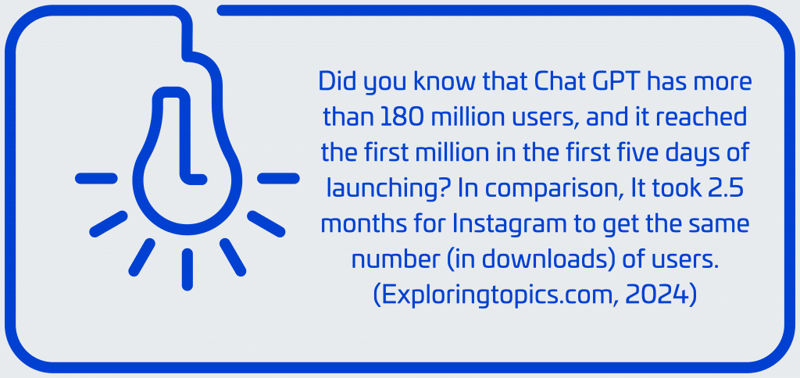
While some may believe that implementing AI is costly and requires specialised staff, this is not entirely true. Hoteliers can leverage the expertise of service providers like us, which offer AI products as part of the package. By combining our advanced email marketing features, such as dynamic content, automation, and personalisation, with Winston AI, hoteliers can gain a competitive edge.
Interestingly, the combination of AI and CRM has become increasingly crucial in the industry. According to the Hubspot State of Marketing 2024 report, 57% of marketers found their CRM to be more important in 2023. Moreover, marketing teams that use CRMs are 128% more likely to have effective strategies. So, focus less on the technical details and embrace the idea of how AI and CRM combined can simplify your work life.
Moreover, marketers can turn to chatbot services to unload customer service workloads and focus on more strategic tasks.
While Generative AI has the potential to benefit all industries, sectors rich in data (such as banking, retail, and hospitality) or those that leverage data (such as information services) are more likely to experience faster progress and should be at the forefront of AI adoption (Deloitte, 2024).
One hurdle to AI adoption is resistance to change from both guests and staff. Some guests may still prefer traditional human interactions and hesitate to embrace AI-powered services. However, change takes time and adaptation, as we witnessed with the proliferation of QR codes during the COVID-19 pandemic. At For-Sight, we use AI on a daily basis, whether it’s on the tech side or expanding our horizons or marketers who use it to create mouth-dropping content.
To ensure the successful implementation of AI technology, hotels should regularly evaluate AI platforms’ performance, seek feedback from guests and staff, and track their sentiments to monitor changes in behaviour. This continuous improvement process will refine the AI technology and ensure that it consistently delivers the desired outcomes.
To maximise the benefits of AI adoption, training your staff in adopting this technology is pivotal. Education and training should cover the capabilities and limitations of AI products, ensuring effective utilisation in daily tasks.
Start by defining the platforms’ end users and motivations for use. Not everyone involved in operational hotel processes will need the training.
Training programs should empower selected staff with essential skills for an AI-powered environment. You can access free courses via Google online courses, Microsoft’s Business courses, LinkedIn Learning courses, Coursera, Udemy, and many more. If you check your local University, they might even have funded upskilling courses for free or at discounted prices. We believe that prompt training for users will be the most beneficial training as it will give them the skills and knowledge on how to get the most accurate results and end goal from interacting with AI platforms. You can enrol on prompt learning courses through learning sites like Coursera or Udemy for a small fee.
By equipping employees with the necessary knowledge and expertise, hotels can seamlessly integrate AI technology into their operations. Marketers don’t need to know the ins and outs of how AI technology works; they should leave it to the professionals and enjoy the fruits of the innovation.
Ensuring a positive attitude toward AI technology among staff members requires effective communication from hotel management. Emphasise that AI is meant to enhance, not replace, human roles. We, humans, are in control of the technology, not the other way around, and we hold the key to unlocking the full potential of it. This reassurance will help ease fears and foster a positive attitude towards AI integration. AI is predicted to predominantly serve as an assistant to existing roles and pave the way for new positions such as prompt engineering and AI specialists (Deloitte, 2024).
In general, Hotels should be transparent with guests about using data privacy policies, including AI, and clearly communicate how their data is collected and used. Providing clear privacy policies and granting guests control over their data is essential to building trust.
AI platforms have been built with security and privacy in mind, so rest assured that they are safe. People are involved in all stages of AI development, from engineering to the end users.
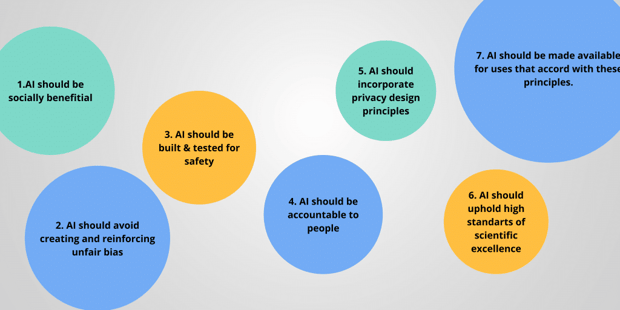
The UK Government has launched a whitepaper to guide the use of Artificial Intelligence, which includes five principles. Over the following months, organisations can expect regulators to provide practical guidance, risk assessment templates, and other resources to help implement these principles in their respective sectors. This will help hoteliers feel more confident about using AI products.
Embracing AI isn’t just about ticking boxes; it’s about setting ethical standards that reflect your commitment to excellence. Take a cue from industry leaders like Google, whose seven-point principle serves as a beacon of inspiration for crafting your own ethical framework. With regulators stepping in to provide support akin to the GDPR rollout, you’ll have the tools you need to confidently navigate this exciting frontier.
Based on the data, we are now confident that the majority of marketers have at least tried to play with AI tools to see how they can benefit their work or personal lives. According to Ascend2 research, 60% of marketers say that AI and Machine learning will have the biggest impact on marketing in the next five years.
The SEO is changing. We have seen a big shift in SERP (Search engine results page). Kenshoo Skai has concluded an analysis that highlights a decline in organic visibility due to Google’s AI overview placement. This also means that marketers need to rely more on paid search strategies. Kenshoo Skai mentions that people now are writing longer and more informative queries as they become more comfortable with the tool.
Another behavioural shift is that people might directly go on Gemini, Copilot and other AI platforms to do a search, similarly as you would on Google search. In the past 6 months, we have noticed more and more visits to our website from generative AI platforms, meaning that we appear in their search results.
This all means that marketers need to adjust to the new behaviour and come up with strategies that in the best-case scenario would guarantee a placement at the Google AI results section. The strategy could include targeting more specific, detailed long-tail keywords (which could potentially look like a question which could be answered on your landing page).
Welcoming dynamic content managed by AI
In one of the most recent Forbes articles the author Bernard Marr highlights that dynamic content generated by AI will be on the rise for marketers. Imagine content that adapts in real-time, and responds to comments based on the reader/contributor’s behaviour and time of the day? This would save a lot of marketers time, but would you trust your brand with it?
Content editing has become more intuitive.
Content editing tools have become more advanced and easier to use. Do you remember the days when we all just used our mobiles or basic Instagram editing tools to create timely content? CapCut is TikTok’s trusted tool for content creation, which offers a wide range of tools directly on your mobile. CapCut’s AI allows marketers to do script-to-video which allows creators to transform written content into engaging visual stories. It also has auto-captions, dynamic AI stickers, automatic video length adjustments, custom voices and camera tracking.
Adobe also offers AI tools for content and video editing but to fully understand the functionality marketers might need to require training. If you want to use AI on-the-go CapCut or Canva are your friends.
Check out insights from our CEO and Co-founder, Allan Nelson, in his video for The Hotels Network about AI in the hospitality industry. You can also watch our Chief Operating Officer, Alan Robertson, discussing AI and sharing predictions for the future of the industry in one of our recent video interviews.
AI has undoubtedly been one of the most significant technological disruptions in the past decade, benefiting various businesses worldwide, including hotels. As technology grows rapidly, it is hard to foresee and predict the future with AI. What we know is that it will impact the way we do business and enhance our day-to-day routines. The hotel industry is one of the industries that will hugely benefit from AI implementation due to the high volume of customer data compared to other sectors. The benefits of AI outweigh the risks; it is a giant leap in human and technology evolution, and if you are not on the bandwagon – you will be missing out.
Owning your data streams will give you a competitive advantage over other hotels, as quality data is needed to train and fine-tune the AI. For-Sight can help you regain control of your data and support you with advanced reporting, guest views, and personalised targeting based on behaviours. Be ahead of your competition and book a discovery call with us today!

Other references:
Discover how For-Sight helped Bridgewood Manor increase direct bookings by 52% through targeted campaigns and data-driven guest engagement.
For-Sight CRM strengthens partnership with hotel feedback and reputation management platform - GuestRevu - benefiting hoteliers.
Elevate your hotel's email marketing with expert tips on segmentation, automation, and effective measurement.